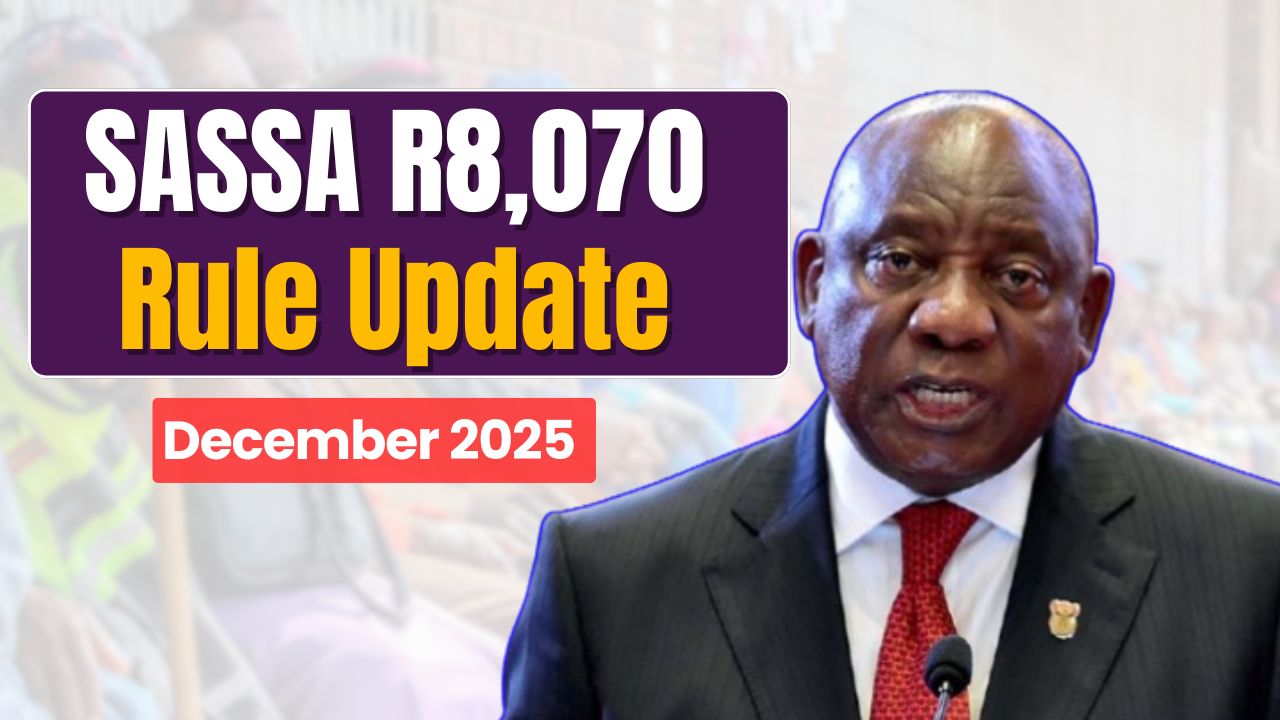
Starting 10 December, the South African Social Security Agency (SASSA) will enforce new and stricter income rules that could result in the sudden removal of grants for anyone earning above R8,070 per month.
This updated threshold applies across most major grant types, including old-age pensions, disability grants, child support grants, and care-dependency grants. For married couples or households, the income limit generally doubles to reflect combined earnings.
Why SASSA Introduced the New Rules
SASSA says the revised income limit is designed to ensure that social grants are directed only to individuals and families who truly need them. With economic pressures increasing and public funds under strain, the agency aims to tighten eligibility so that the most vulnerable remain the priority.
Alongside this income adjustment, SASSA has also intensified verification checks. Instead of relying only on declarations made when applying, the agency will routinely monitor income changes, bank activity, employment shifts, and undeclared earnings. Beneficiaries are legally required to report any change in income after approval, and failing to do so can trigger a review or even immediate suspension.
Who Is Most at Risk?
The new rule directly affects grant recipients who earn wages, freelance income, informal income, or irregular payments that may push them above the R8,070 threshold. Many households depend on both a small income and a grant to survive; losing either could cause financial instability.

The impact is especially significant for pensioners, people with disabilities, and caregivers who may not be able to increase their income if their grant is revoked. Additionally, households with multiple earners must take note that combined income may place them over the limit, even if one person individually earns below it.
Beneficiaries selected for review will need to provide updated documents such as bank statements, income slips, or affidavits. Failure to comply often results in suspension and, eventually, termination of the grant.

What You Should Do Now
Grant recipients should carefully review their full income, including informal or irregular earnings. Those close to the threshold should start gathering documents in case SASSA initiates an income review. It is also essential to report any change in employment or income promptly to avoid sudden suspension.
People with fluctuating income such as freelancers, part-time workers, or temporary workers may experience periods where their earnings exceed the limit. Planning ahead and monitoring monthly income closely can help avoid complications.

It is equally important to rely only on official SASSA communication. Many scams and fake notices circulate on social media, particularly when new rules are announced. Always verify information through trusted official channels before taking action.
What This Means for the Future
The new income rules reflect a broader policy shift toward more tightly targeted social support. While this may help protect public funds from misuse, it places thousands of households at risk of losing the financial assistance they rely on. Critics argue that even earning slightly above R8,070 does not mean families are financially secure, especially under current economic conditions.

As South Africa continues to face rising living costs, high unemployment, and widening inequality, the tightening of grant eligibility may deepen financial stress for families living just above the poverty line. At the same time, SASSA’s approach signals a continued focus on preventing fraud and ensuring that grants reach those in greatest need.